
The History of the TSO
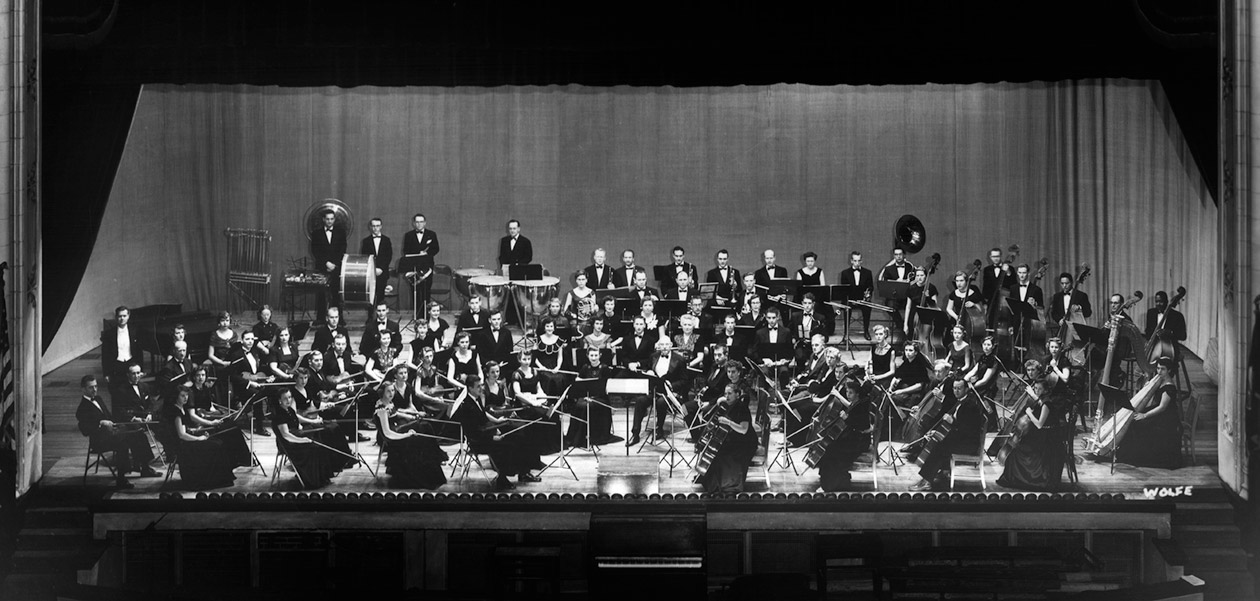
THE TOPEKA SYMPHONY was formed in 1945 by Washburn University music professor Everett Fetter. It was initially known as the Topeka Civic Orchestra and consisted of around 60 Washburn University and Topeka High students as well as talented town folks. Concerts were frequently performed at MacVicar Chapel on the Washburn campus and at Topeka High. We officially became the Topeka Symphony Orchestra (TSO) in 1980.
TSO has been fortunate to have incredible stability in its leadership of the orchestra. Fetter remained the Music Director and Conductor for 30 years before being succeeded in 1976 by Jack L. Herriman, who remained until 1988 when Dr. John Strickler took the helm ahead of the 1989 season. Dr. Strickler served until 2012, when the current Music Director and Conductor, Dr. Kyle Wiley Pickett was hired.
Over the years, the orchestra has transformed from a community orchestra into a premier professional orchestra attracting musicians from across the region. As the size, talent and confidence of the symphony have grown over the years, the range of performances has expanded to include several world and national premiers. The TSO has also performed with internationally famous musicians such as Itzhak Perlman and Jon Nakamatsu.
Thanks to the generous support of patrons and corporate partners, efforts of the orchestra members, the leadership of the Board of Directors, the fiscal management from the Endowment Board of Trustees, and the volunteer time of the Topeka Symphony League (now Friends of Topeka Symphony), the Topeka Symphony Orchestra has become a true jewel in northeast Kansas.
The History of the TYO
The Topeka Youth Symphony convened for the first time in 1957 under the sponsorship of the Topeka Symphony Society and led by Mr. Robert Hallman. Its mission is to provide young musicians the opportunity to play in a symphony orchestra with their peers from high schools throughout northeast Kansas. There are now three Youth Orchestras that consist of student musicians from the Topeka area and across northeast Kansas.